
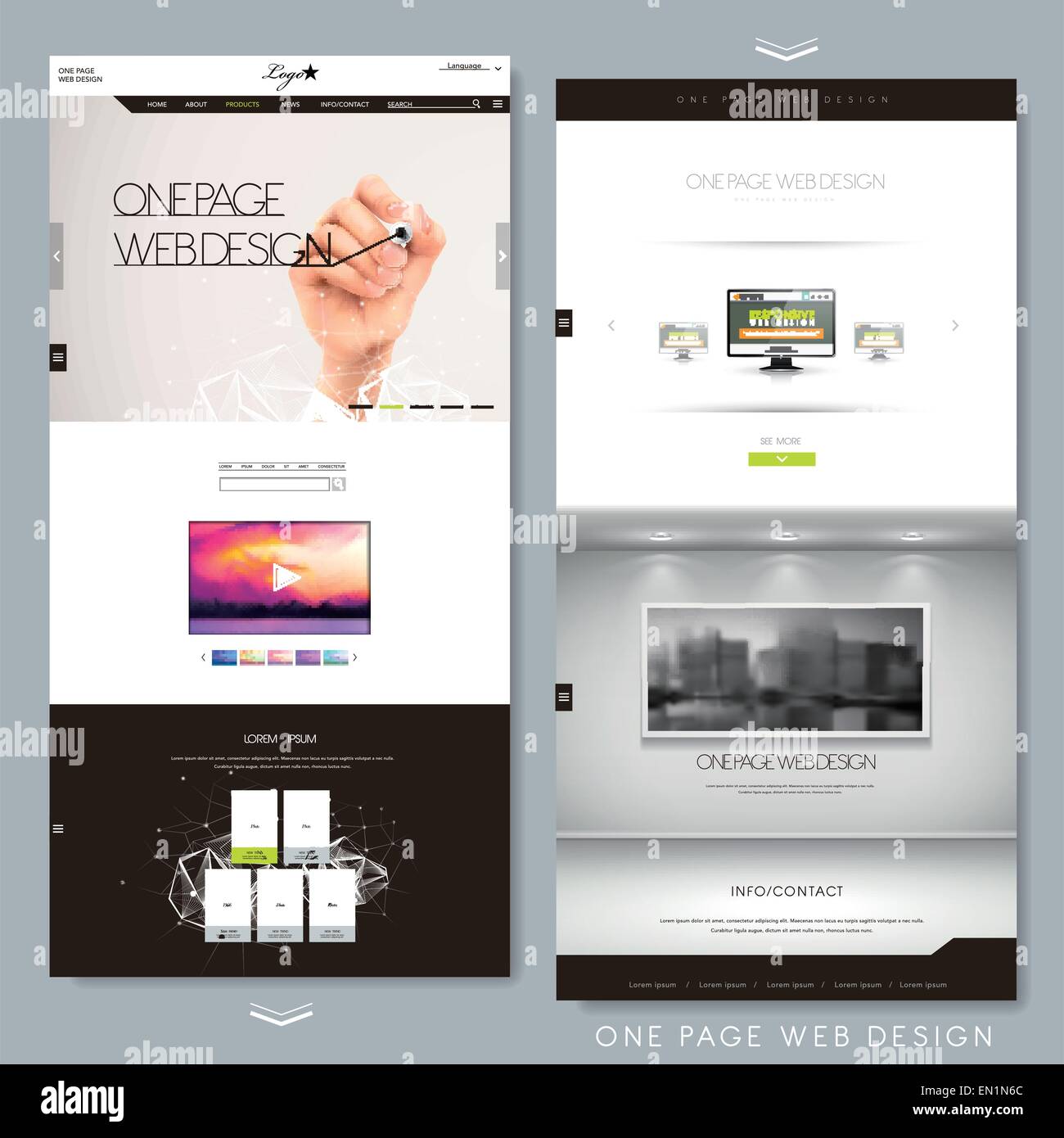
The Power of One-Page Website Design
In today’s fast-paced digital world, simplicity and efficiency are key when it comes to web design. One-page websites have emerged as a popular trend that offers a streamlined and engaging user experience. By condensing all essential information onto a single page, these websites eliminate the need for users to navigate through multiple pages, resulting in a seamless browsing experience.
Benefits of One-Page Websites:
- Simplicity: One-page websites are clean and uncluttered, making it easy for users to find the information they need quickly.
- User-Friendly Navigation: With all content on a single page, users can simply scroll down to access different sections, eliminating the need for complex navigation menus.
- Mobile-Friendly: One-page websites are responsive by design, ensuring optimal viewing experience across various devices, including smartphones and tablets.
- Faster Loading Times: Since one-page websites have fewer elements to load, they tend to load faster than traditional multi-page sites, reducing bounce rates and improving user retention.
- Engaging Storytelling: The linear layout of one-page websites allows for creative storytelling through compelling visuals and content that guides users through a narrative journey.
Design Tips for Creating an Effective One-Page Website:
- Define Your Purpose: Clearly outline your goals and target audience to ensure your one-page website delivers the right message effectively.
- Prioritise Content: Focus on essential information and visuals that convey your brand story concisely without overwhelming the user with unnecessary details.
- Create Visual Hierarchy: Use contrasting colours, typography, and spacing to guide users’ attention towards key elements on the page.
- Incorporate Calls-to-Action (CTAs): Strategically place CTAs throughout the page to encourage user interaction and drive conversions.
- Optimise for SEO: Implement relevant keywords, meta tags, and responsive design practices to improve search engine visibility and attract organic traffic.
In conclusion, one-page website design offers a modern approach to web development that prioritises user experience and engagement. By embracing the simplicity and efficiency of single-page layouts, businesses can create visually appealing websites that effectively communicate their brand message while providing an intuitive browsing experience for visitors.
Top Tips for Designing an Effective One-Page Website
- Keep the design simple and uncluttered to provide a seamless user experience.
- Ensure easy navigation by using clear menus and intuitive scrolling features.
- Use high-quality visuals and engaging content to capture visitors’ attention.
- Optimize for mobile devices to cater to users accessing the site on smartphones or tablets.
- Include a clear call-to-action that guides visitors on what steps to take next.
- Less is more” – focus on essential information and avoid unnecessary elements that may distract users.
Keep the design simple and uncluttered to provide a seamless user experience.
To create an effective one-page website, it is crucial to keep the design simple and uncluttered. By minimising distractions and focusing on essential elements, such as clear navigation and concise content, you can provide users with a seamless browsing experience. A clean and uncluttered design not only enhances visual appeal but also improves usability, allowing visitors to easily find the information they are looking for without feeling overwhelmed. Prioritising simplicity in design ensures that users can navigate the website effortlessly, leading to increased engagement and a positive overall user experience.
Ensure easy navigation by using clear menus and intuitive scrolling features.
To enhance user experience on a one-page website, it is crucial to ensure easy navigation by incorporating clear menus and intuitive scrolling features. By providing users with straightforward navigation options and seamless scrolling functionality, visitors can effortlessly explore different sections of the website without feeling lost or overwhelmed. Clear menus help users quickly locate specific content, while intuitive scrolling features enable smooth transitions between sections, enhancing overall usability and engagement.
Use high-quality visuals and engaging content to capture visitors’ attention.
In the realm of one-page website design, utilising high-quality visuals and compelling content is paramount to capturing visitors’ attention effectively. By incorporating visually appealing graphics, striking images, and engaging storytelling, businesses can create a captivating online presence that resonates with their target audience. These elements not only enhance the aesthetic appeal of the website but also serve to communicate the brand’s message in a memorable and engaging manner, ultimately drawing visitors in and encouraging them to explore further.
Optimize for mobile devices to cater to users accessing the site on smartphones or tablets.
In the realm of one-page website design, it is crucial to optimise for mobile devices to accommodate users accessing the site on smartphones or tablets. By ensuring responsiveness and compatibility across various screen sizes, businesses can enhance the user experience and reach a broader audience. Mobile optimisation not only improves accessibility but also contributes to higher engagement levels and better retention rates, reflecting a commitment to providing a seamless browsing experience for all visitors, regardless of their chosen device.
Include a clear call-to-action that guides visitors on what steps to take next.
In the realm of one-page website design, a crucial tip is to incorporate a clear call-to-action that directs visitors on the next steps to take. By strategically placing prominent and concise CTAs throughout the page, such as “Sign Up Now” or “Contact Us Today,” businesses can guide users towards desired actions, whether it be making a purchase, subscribing to a newsletter, or requesting more information. This proactive approach not only enhances user engagement but also increases the likelihood of conversions, ultimately driving the success of the website and fulfilling its intended purpose.
Less is more” – focus on essential information and avoid unnecessary elements that may distract users.
In the realm of one-page website design, the principle of “less is more” reigns supreme. By prioritising essential information and steering clear of superfluous elements that could potentially divert users’ attention, designers can create a focused and impactful user experience. Embracing simplicity not only enhances clarity and readability but also ensures that visitors can swiftly navigate through the content without feeling overwhelmed. This minimalist approach allows for a more engaging and effective communication of key messages, ultimately leading to a more memorable and satisfying interaction for users.