
The Evolution of Ecommerce Shopping Carts
In the world of online shopping, the humble shopping cart plays a crucial role in facilitating seamless transactions and enhancing the overall user experience. Over the years, ecommerce shopping carts have evolved significantly to meet the changing needs and preferences of consumers and businesses alike.
Early Days: Simple Carts
Initially, ecommerce shopping carts were basic and utilitarian, serving primarily as a means for customers to store their selected items before proceeding to checkout. These early carts lacked sophisticated features and customisation options but laid the foundation for future innovations in online retail.
Modern Features: Personalisation and Integration
Today, ecommerce shopping carts boast a plethora of features designed to enhance the shopping experience. From personalised product recommendations based on browsing history to seamless integration with payment gateways and shipping providers, modern carts are equipped to streamline the entire purchasing process.
Mobile-Friendly Solutions
With the rise of mobile commerce, ecommerce platforms have adapted their shopping carts to be mobile-friendly. Responsive design ensures that customers can easily browse products, add items to their cart, and complete transactions on any device, whether it’s a smartphone or tablet.
Enhanced Security Measures
Security is paramount in online retail, and modern ecommerce shopping carts prioritise data protection and secure transactions. Features such as SSL encryption, PCI compliance, and fraud detection algorithms help safeguard sensitive information and build trust with customers.
The Future: AI-Powered Carts
Looking ahead, artificial intelligence (AI) is poised to revolutionise ecommerce shopping carts further. AI-powered carts can offer real-time product recommendations, personalised discounts, and even predictive analytics to anticipate customer needs and preferences.
In Conclusion
The evolution of ecommerce shopping carts reflects the dynamic nature of online retail. From simple storage tools to sophisticated digital assistants, these essential components continue to shape the way we shop online. As technology advances and consumer expectations evolve, one thing remains clear: the future of ecommerce is bright with endless possibilities.
Understanding Ecommerce Shopping Carts: Key Questions and Answers
- What are the two types of shopping carts?
- What is a shopping cart in ecommerce?
- What is eCommerce shopping?
- How does a shopping cart work?
- What is the best online shopping cart?
- What is an eCommerce shopping cart?
- How do I make an ecommerce cart?
What are the two types of shopping carts?
When it comes to ecommerce shopping carts, there are primarily two types that businesses commonly utilise: hosted shopping carts and self-hosted shopping carts. Hosted shopping carts are provided by third-party service providers who host the cart on their servers, offering convenience and ease of setup for businesses without the need for technical expertise. On the other hand, self-hosted shopping carts require businesses to install and manage the cart software on their own servers, providing greater control over customisation and data security but requiring more technical proficiency. Each type of shopping cart has its own set of advantages and considerations, allowing businesses to choose the option that best aligns with their specific needs and preferences in the realm of ecommerce.
What is a shopping cart in ecommerce?
In the realm of ecommerce, a shopping cart serves as a virtual basket that allows online shoppers to gather and store items they intend to purchase from an online store. Essentially, it functions as a digital counterpart to the physical shopping cart used in traditional brick-and-mortar stores. The shopping cart enables customers to browse through products, select their desired items, adjust quantities if needed, and proceed to checkout when ready to complete their purchase. It plays a pivotal role in the online shopping experience by providing a centralised space for managing selected products before finalising transactions securely and conveniently.
What is eCommerce shopping?
Ecommerce shopping refers to the act of purchasing goods or services online through a virtual platform, known as an ecommerce website or online store. It allows customers to browse products, add items to a digital shopping cart, and complete transactions electronically, all from the convenience of their own devices. Ecommerce shopping offers a convenient and efficient way for consumers to access a wide range of products, compare prices, read reviews, and make secure payments without the need to visit physical retail locations. This digital shopping experience has become increasingly popular due to its accessibility, flexibility, and ability to cater to diverse consumer preferences.
How does a shopping cart work?
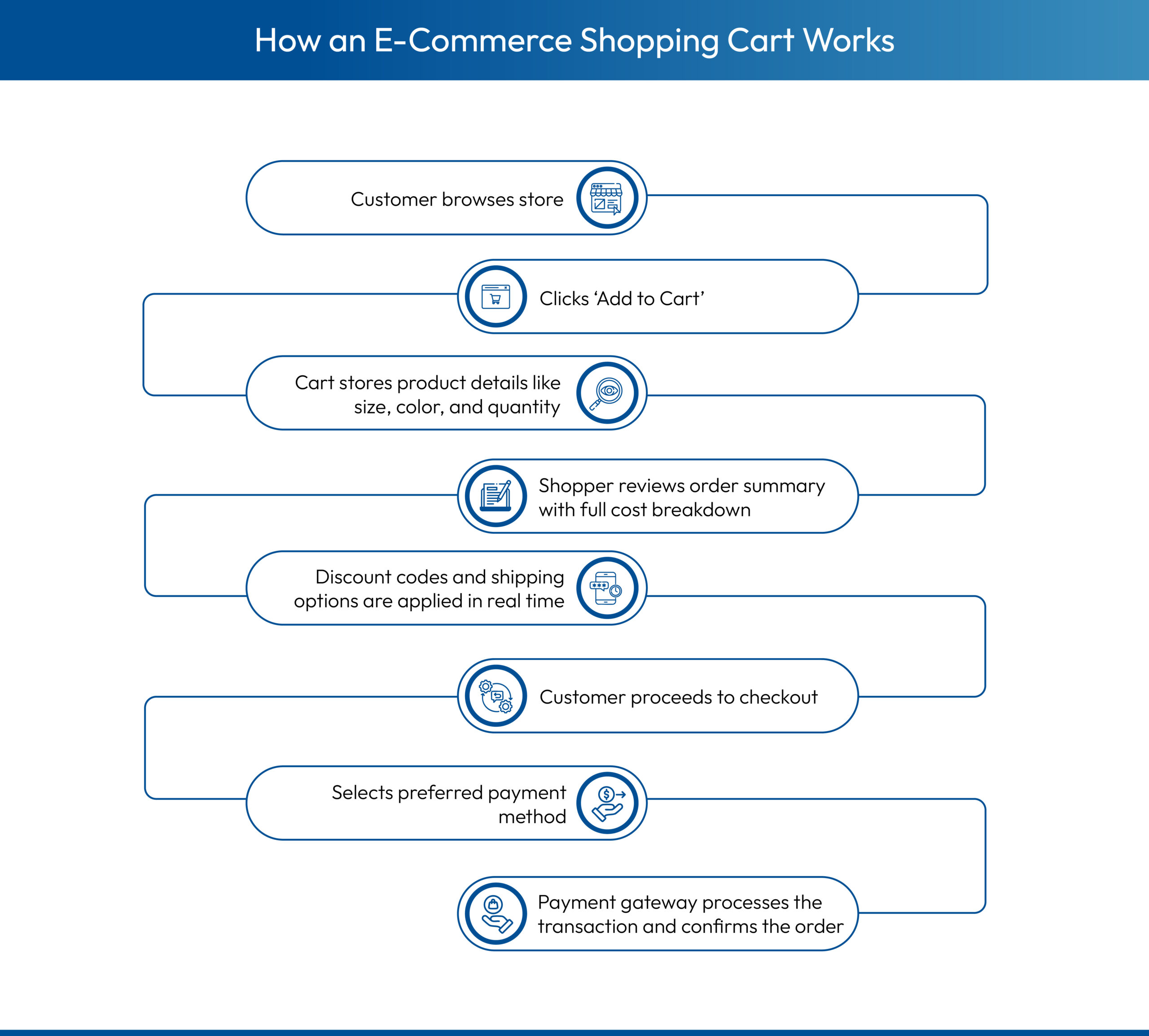
A shopping cart in ecommerce functions as a virtual basket that allows online shoppers to select and store items they wish to purchase from a website. When a customer navigates through a product catalogue and finds items of interest, they can add these products to their shopping cart by clicking on the “Add to Cart” button. The shopping cart then accumulates all selected items, displaying the quantity, price, and total cost. Customers can review their selections, make changes such as adjusting quantities or removing items, and proceed to checkout when ready. At checkout, the shopping cart calculates the total cost including taxes and shipping fees, prompts customers for payment information, and finalises the transaction once payment is confirmed. In essence, a shopping cart simplifies the online buying process by centralising product selections and facilitating secure transactions in just a few clicks.
What is the best online shopping cart?
When it comes to the question of “What is the best online shopping cart?”, the answer largely depends on the specific needs and goals of an individual or business. There are numerous ecommerce platforms available, each offering a range of features and capabilities to cater to different requirements. Factors such as ease of use, scalability, customisation options, integration with third-party services, security features, and customer support all play a crucial role in determining the suitability of an online shopping cart for a particular user. It is recommended to conduct thorough research, consider individual preferences, and possibly seek expert advice to identify the best online shopping cart that aligns with one’s unique requirements and objectives.
What is an eCommerce shopping cart?
An eCommerce shopping cart is a virtual basket or container that allows online shoppers to store and manage items they wish to purchase from an online store. Think of it as the digital equivalent of a physical shopping cart in a brick-and-mortar store. Customers can browse products, select items they want to buy, add them to the cart, and proceed to checkout when ready. The shopping cart keeps track of the selected items, quantities, and total costs, providing a convenient and user-friendly way for customers to shop online.
How do I make an ecommerce cart?
Creating an ecommerce cart involves several key steps to ensure a seamless shopping experience for your customers. Firstly, you need to select a reliable ecommerce platform that offers cart functionality, such as WooCommerce, Shopify, or Magento. Next, customise your cart by adding product categories, descriptions, images, and pricing details. Implement secure payment gateways to enable smooth transactions and integrate shipping options for efficient order fulfilment. Finally, test your cart thoroughly to identify any bugs or usability issues before launching it live on your website. By following these steps carefully, you can build a robust and user-friendly ecommerce cart that enhances the overall shopping journey for your customers.